Thinking Outside of the Data Box
"What if self-trackers could actively deconstruct and change
the data value or structure—'manipulate' their data?"
Self-reflection is a crucial phase in self-tracking that allows users to gain insights and improve their behaviors. However, many self-trackers experience stagnation after long periods of data collection and reflection, often revisiting the same insights without making further progress. Existing approaches, such as personalized visualizations or AI-driven tools, fall short in these cases, as they merely re-represent existing data without offering fundamentally new perspectives.
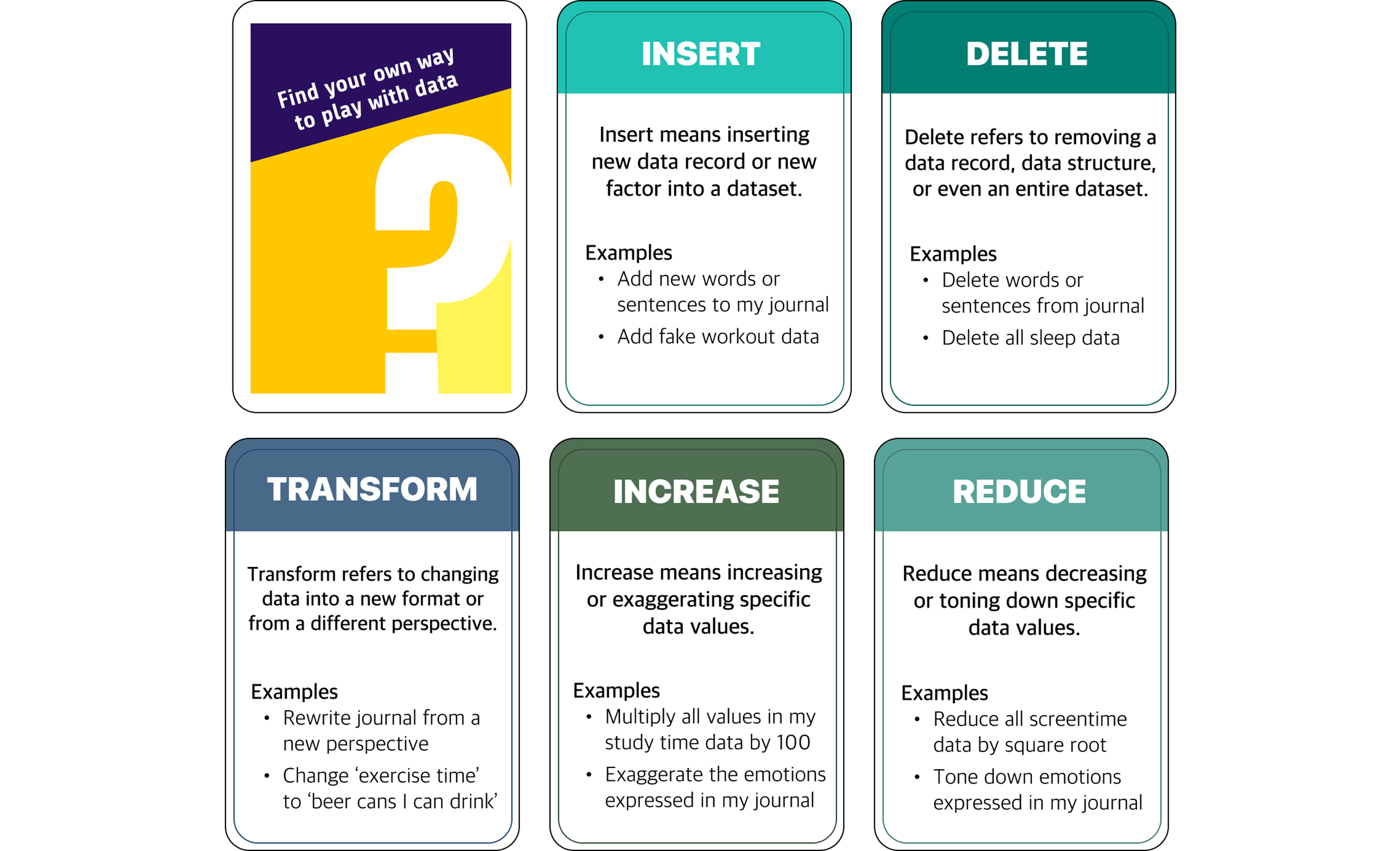
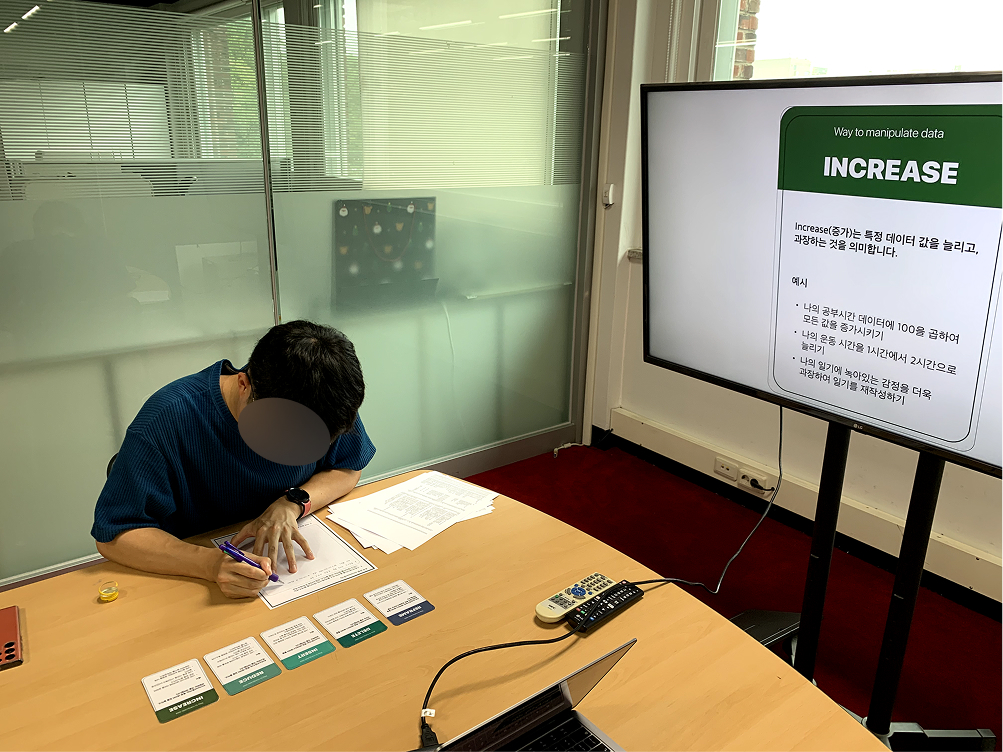
We defined five types of data manipulation—Insert, Delete, Transform, Increase, and Reduce—and explored them through an exploratory workshop and a one-week field trial with ten participants. Participants manipulated their data in various ways, such as correcting broken records or even falsifying entries. We found that data manipulation helped break repetitive thinking patterns and allowed them to view themselves from new perspectives. Data manipulation also fostered positive emotions and illusions, boosting motivation for further action. However, we also observed challenges, including distorted self-perceptions and limited applicability across different data domains. These findings suggest that, when applied thoughtfully, data manipulation can serve as a powerful tool to revitalize self-reflection and behavioral engagement. Based on these insights, we proposed design implications for integrating data manipulation into future personal informatics systems.


Speculative approach
Qualitative research