FluidTrack
"How can we design a child-parent collaborative self-tracking system
to improve DUFS management?"
Daytime urinary frequency syndrome (DUFS) management requires preschool-aged children to drink adequate water and track their voiding and defecation behaviors. However, these tasks are cognitively challenging for young children and burdensome for caregivers, who often lack practical support tools. Moreover, traditional tracking methods, such as paper charts, are not engaging for children and do not facilitate effective collaboration between children and parents.
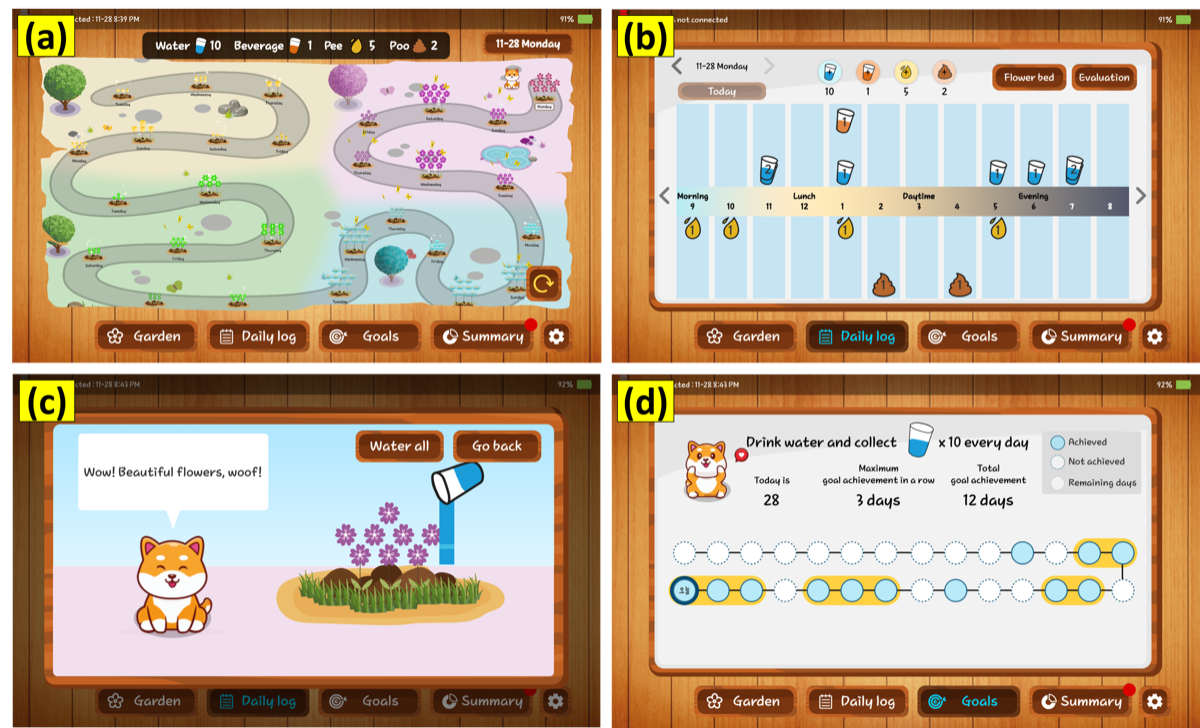
Based on the design goals, we designed the FluidTrack system, consisting of MoaGardenApp and MoaBand. With these two devices, preschool-aged children were able to track their own water intake, voiding, and defecation behaviors, while enabling them and their parents to collaboratively manage and reflect on the captured data. We then conducted design feedback interviews with child-parent dyads to examine their understanding of our design concepts and to identify their needs. The results showed that preschoolers could engage in semi-automated self-tracking using the button-based MoaBand, but some tasks (e.g., tracking water amounts with MoaBottle or actively engaging with the application) required additional support, highlighting opportunities for designing collaborative tracking experiences.
I was primarily responsible for designing and integrating Mongmong, the character for the app. To encourage children to sustain their motivation, I designed Mongmong to provide immediate feedback and interactive responses to users' actions. I collaborated closely with designers and developers to integrate the character into the overall system. In a one-month user study, the app achieved substantial engagement from children, and clinicians reported that participants showed signs of improvement in their symptoms of DUFS.
Self-tracking
Pediatric health management
Design feedback session facilitation
Qualitative data analysis