Oxynizer
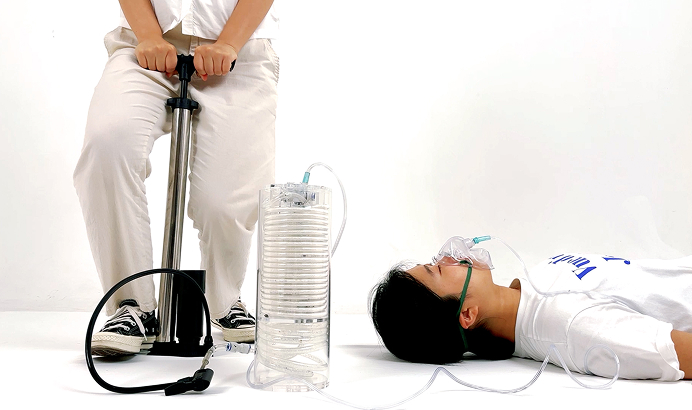
"How can we provide medical oxygen at an affordable price to the third-world countries?"
The impact of respiratory diseases like COVID-19 and influenza on humanity is growing. During COVID-19, many people experienced respiratory difficulties, and without timely access to oxygen, numerous lives were lost. In Africa, over 130,000 people died due to delayed oxygen delivery. Oxygen shortage is not limited to pandemics. To address this, a substantial production and supply of oxygen are necessary. However, third-world countries lack the infrastructure, especially electrical facilities to handle this demand.
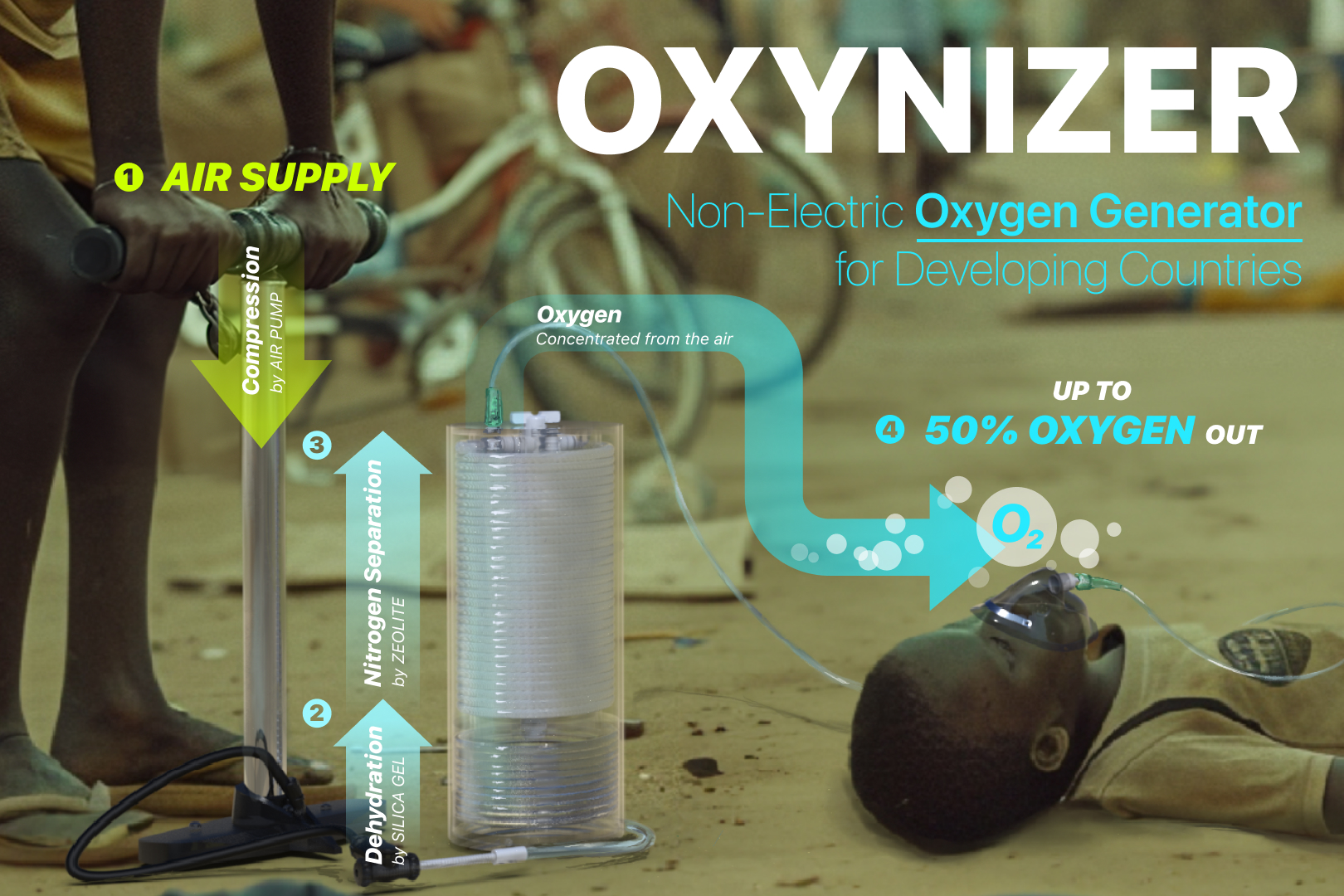
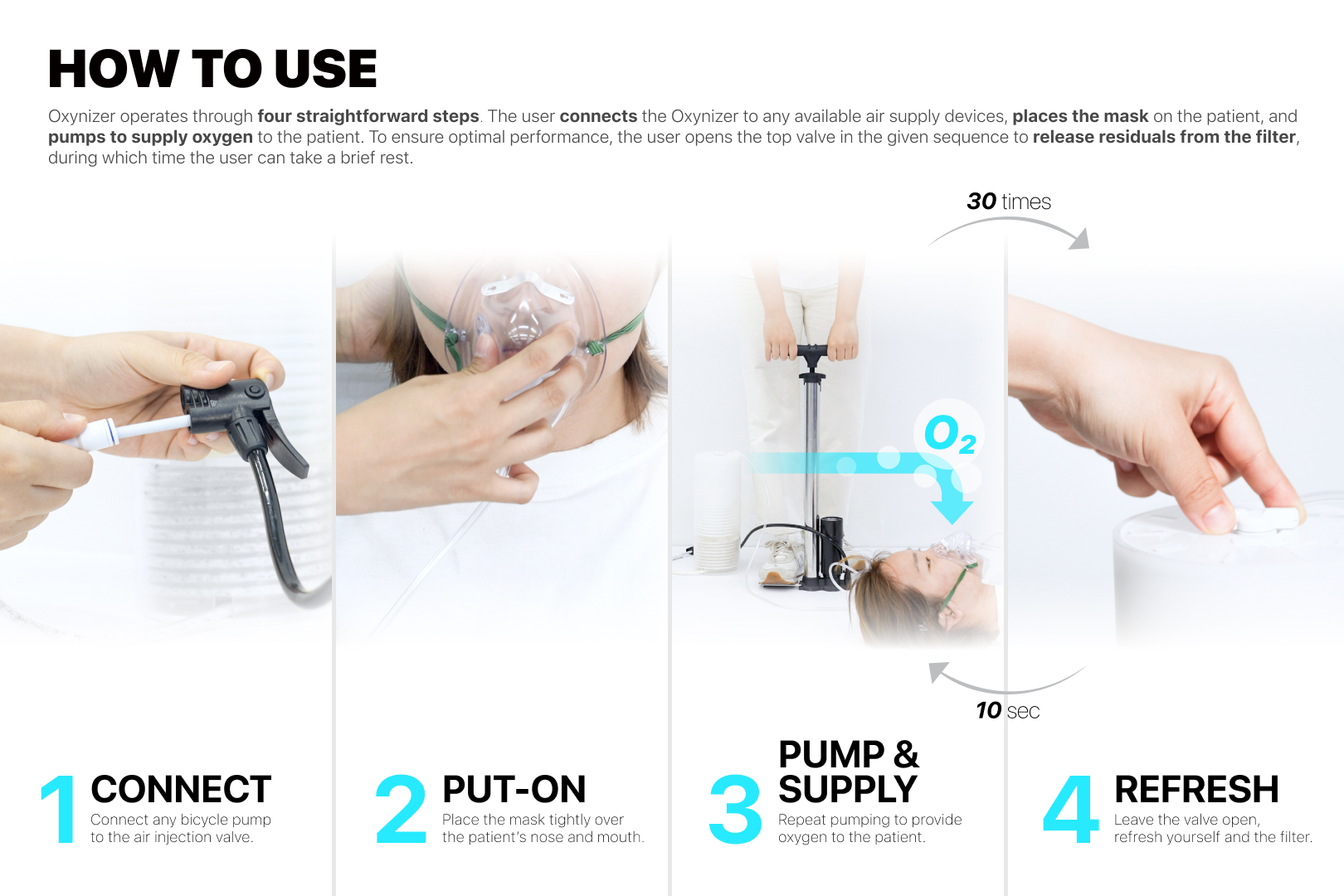
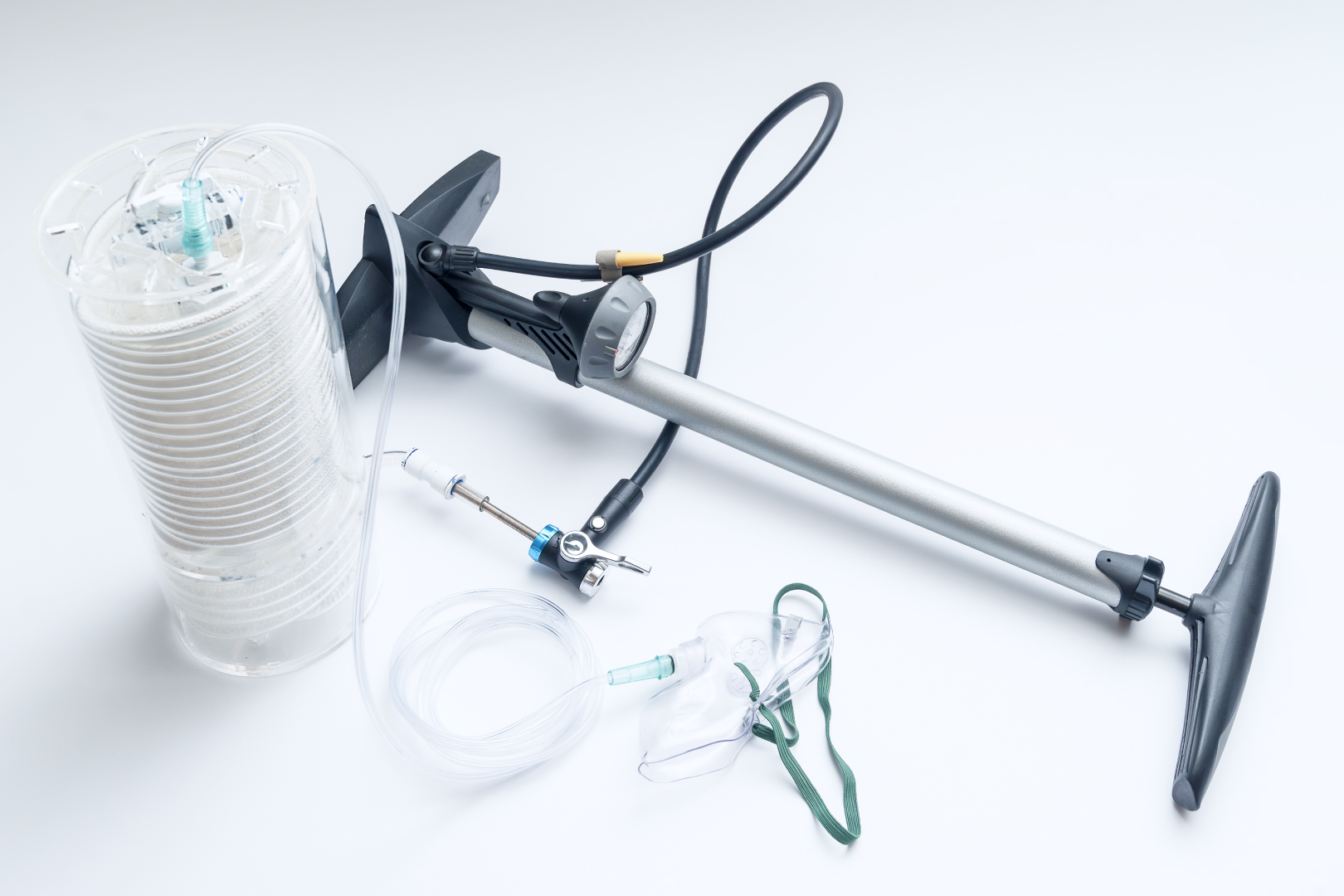
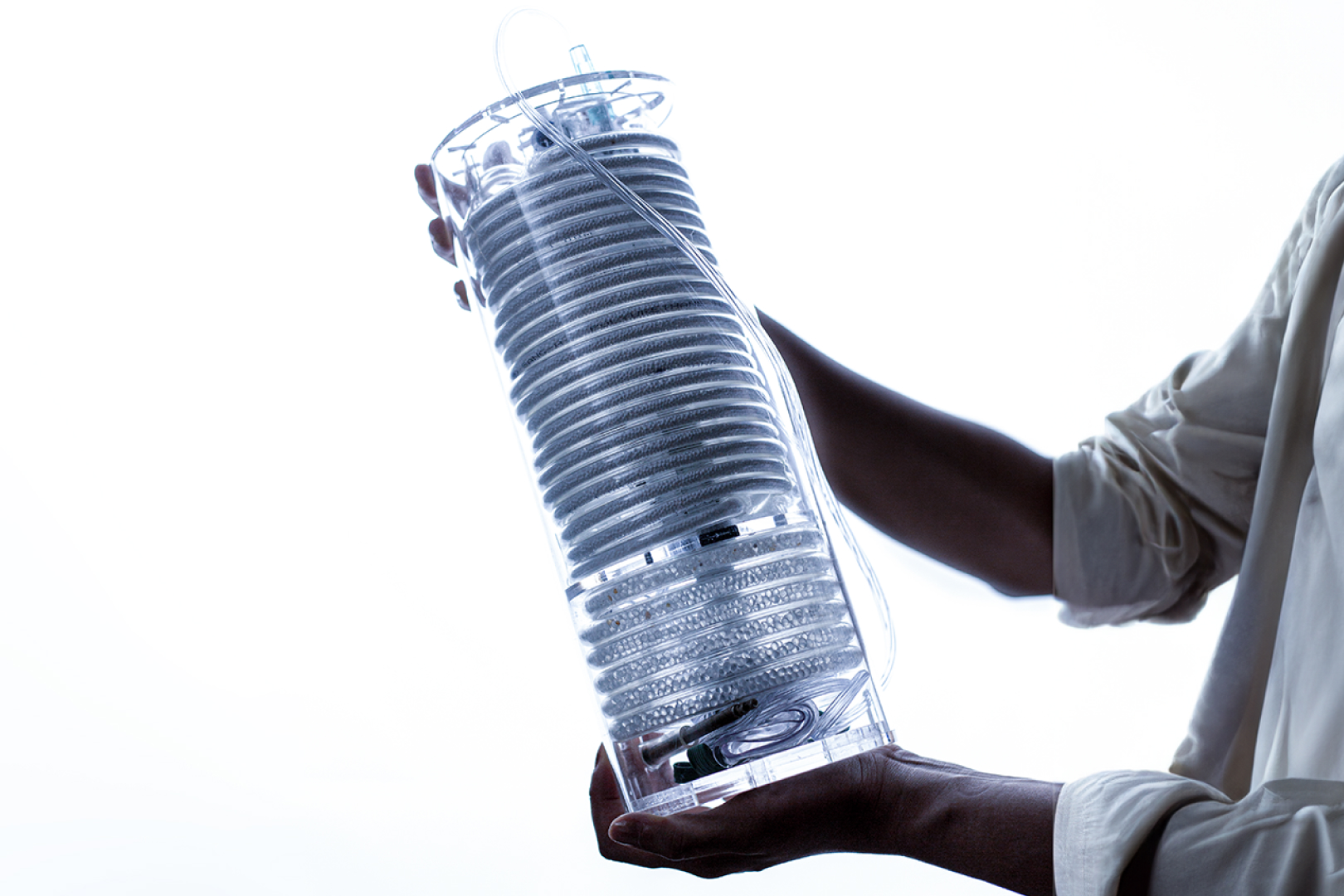
To address this, we designed Oxynizer, sustainable and non-electric oxygen generator. Oxynizer can produce oxygen at concentrations approximately 1.5 to 2 times higher than ambient air, which is up to 50%. Since it does not require electric power, it can supply oxygen to patients anywhere at any time. Additionally, it consists of semi-permanent, reusable materials with off-the-shelf hose and fittings, making easy to replace parts. Oxynizer operates through three stages: compression, filtration, and refresh. In the compression stage, air is compressed through a hose structure. The compressed air is dried via silica gel and then filtered by zeolite, which removes nitrogen molecules from the air, increasing the oxygen concentration. Oxynizer thus supplies patients with oxygen at a higher concentration than ambient air. In the refresh stage, accumulated nitrogen is released back into the atmosphere through a refresh valve, maintaining continuous operation.
Disaster management
Human-centered design
User scenario & interaction design
Material design
KAIST Q-Day Creativity and Talent Education Award, IDEA Bronze (Social Impact, Professional)