Shorts Intervention
"How can we support users to self-regulate short-form video use?"
Do you enjoy watching short-form videos? Platforms like YouTube Shorts, Instagram Reels, and TikTok provide instant enjoyment and quick information, but they often lead to excessive and passive consumption. Existing interventions tend to focus on restrictions or simple time reminders, which users find frustrating or easy to ignore. To achieve balanced usage of media, self-regulation is important. It is the ability to control one's behaviors by resisting impulses and habitual responses.
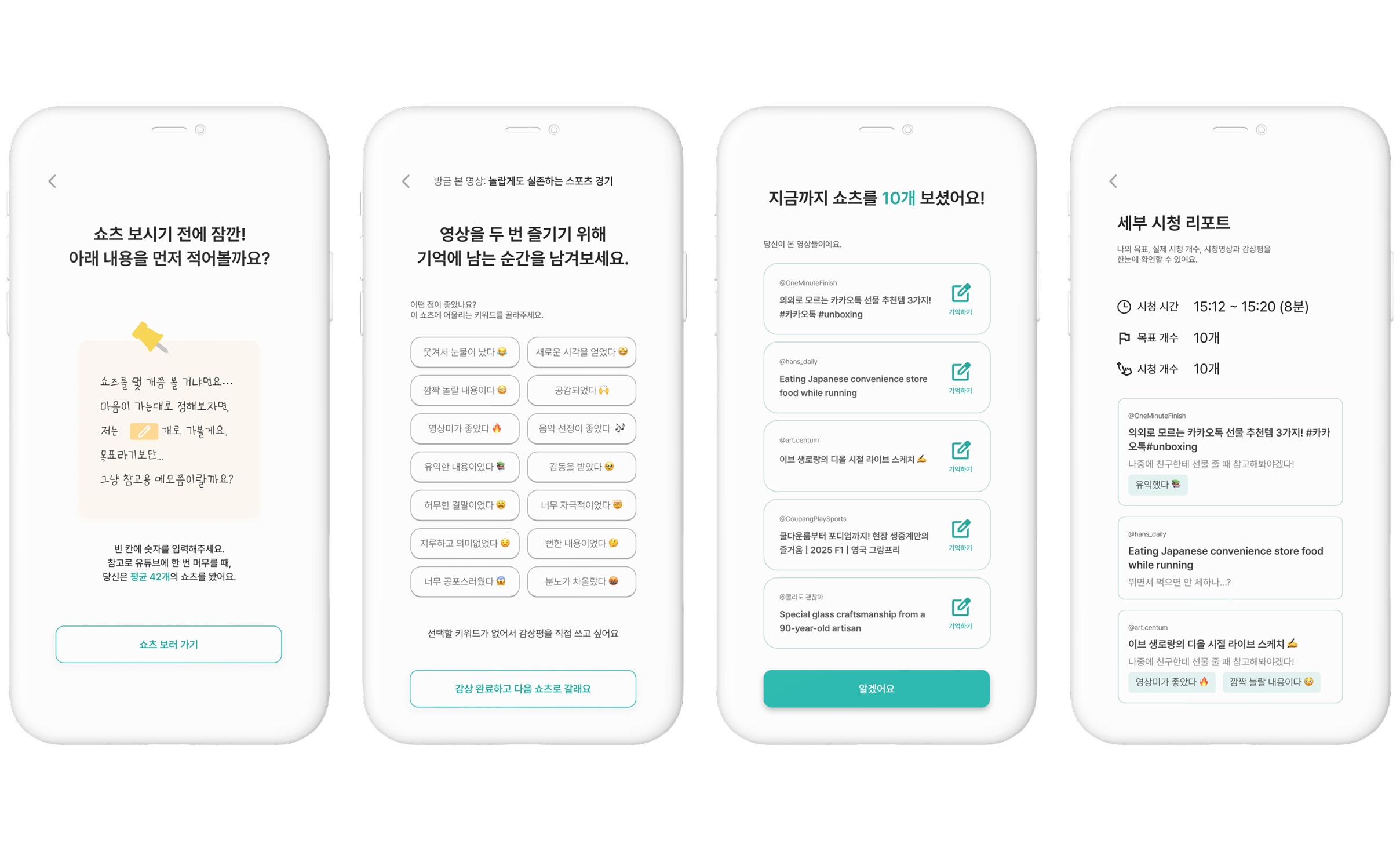
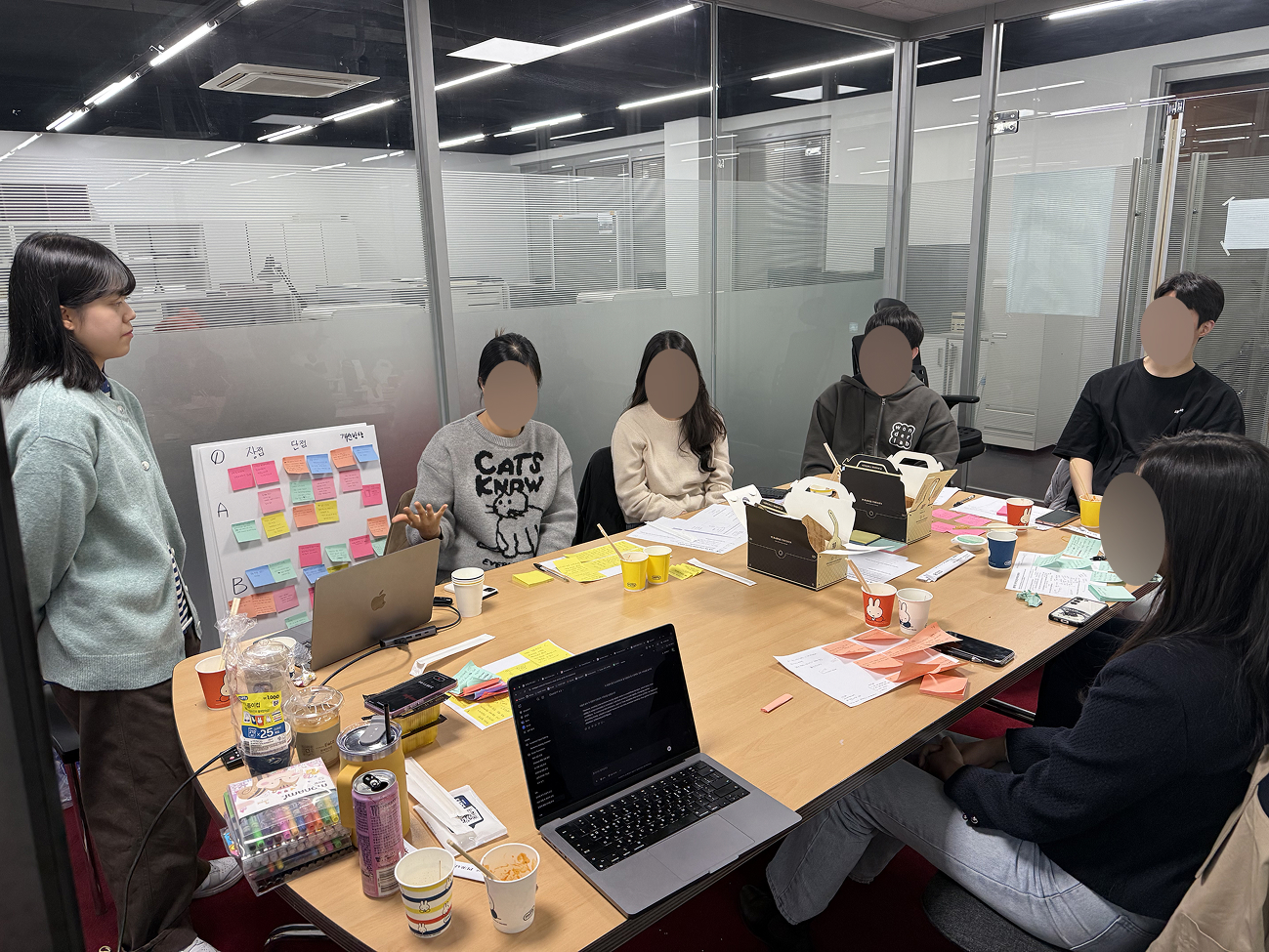
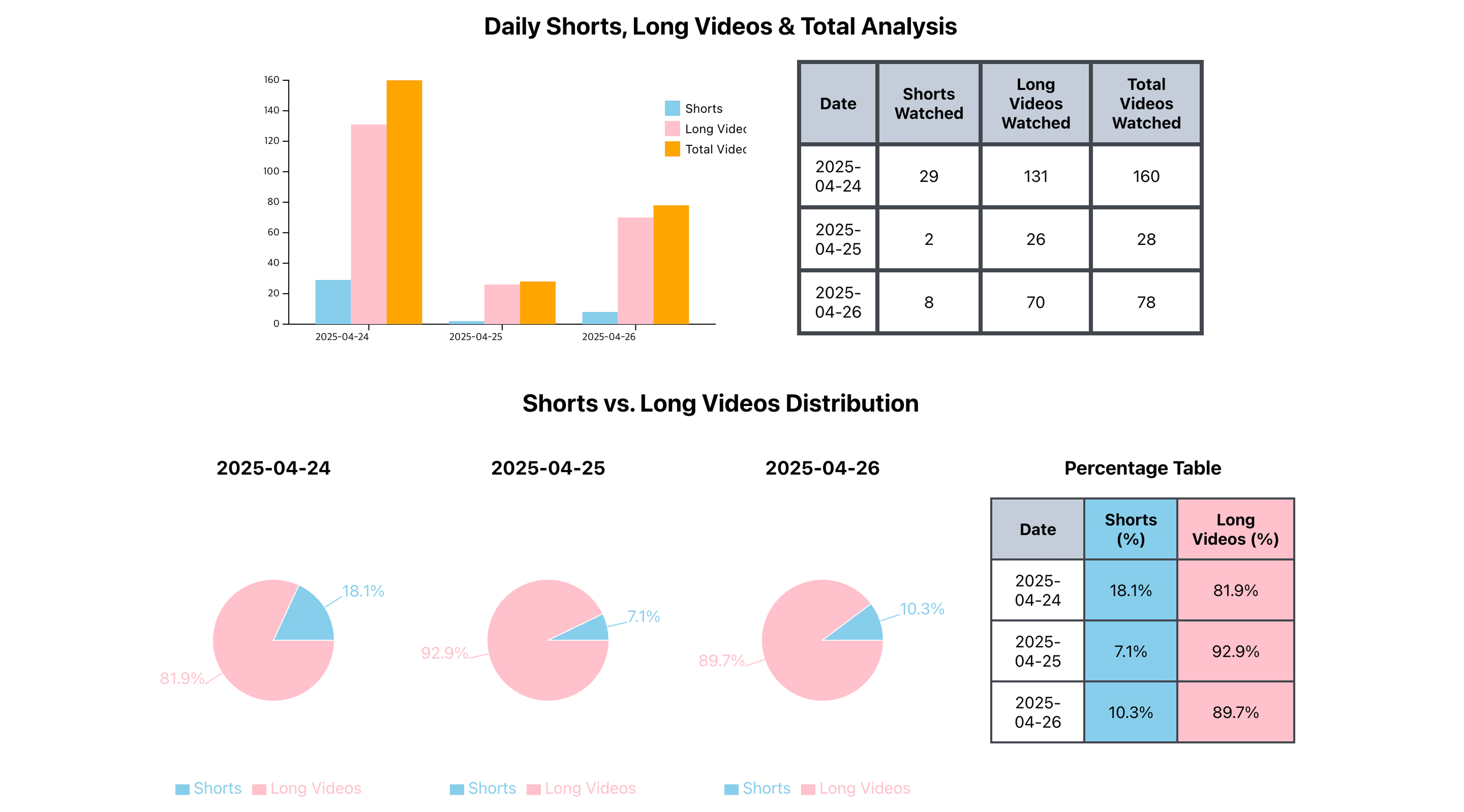
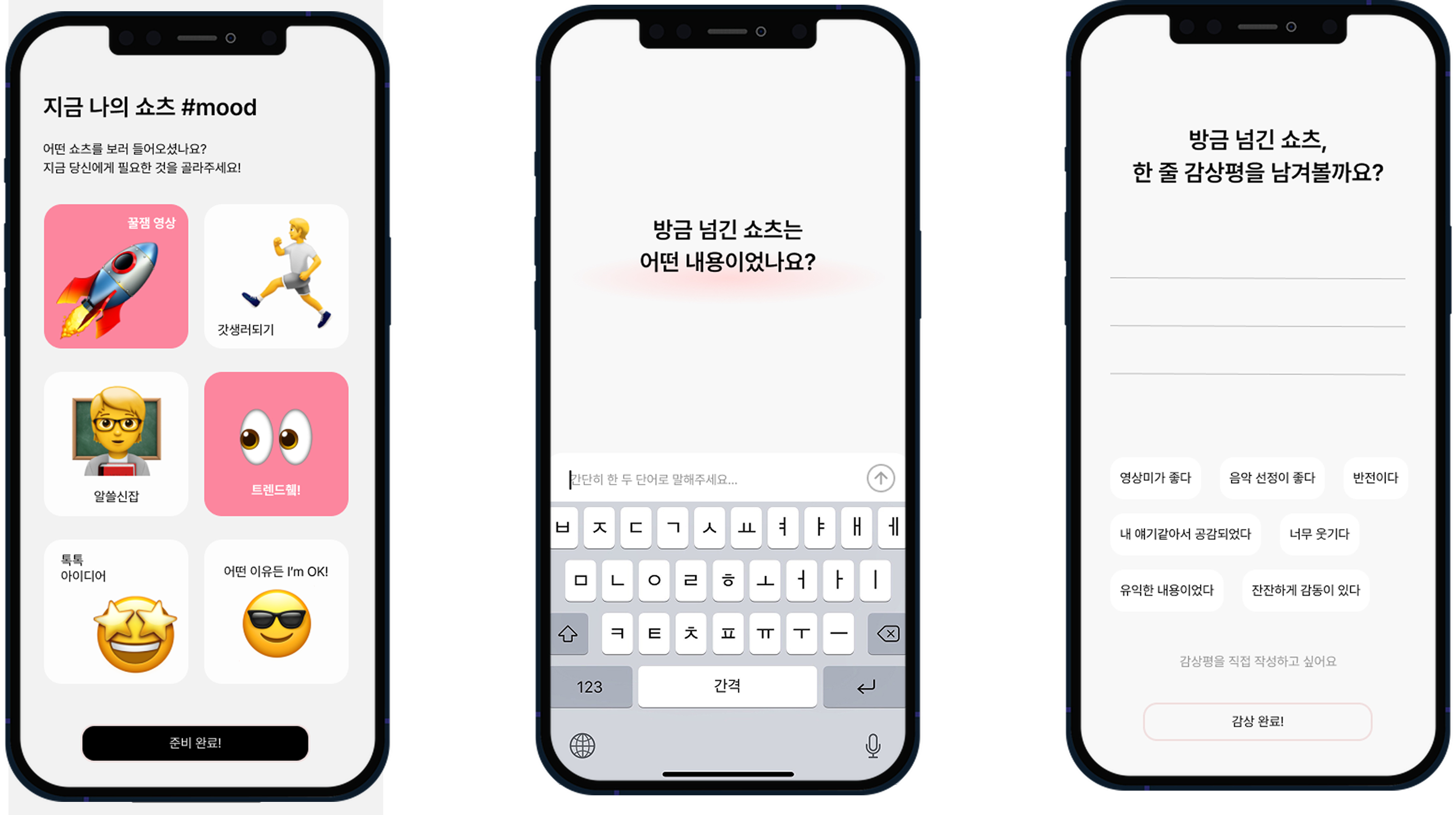
To explore this question, we conducted three studies. First, we carried out a 4-day diary study with 8 participants to understand how people engage with short-form videos in daily life. This revealed four key behavioral characteristics: blurred and distorted awareness of viewing time, active pursuit of stimulating and immersive content, passive and effortless consumption, and ephemeral stimulation with a regretful aftermath. Based on these insights, we identified three design goals: enabling users to become aware of their viewing behaviors and habits, supporting intentional and active consumption, and reducing the high ephemerality of short-form videos to lessen regret and self-criticism. After our own ideation, we validated and improved intervention ideas through a design workshop with 6 UX/UI designers. Finally, we designed and implemented an intervention with four components: Goal Nudge, Micro Reflection, Viewing Checkpoint, and Viewing Logbook. Goal Nudge prompts users to set viewing goals and provides playful reminders upon reaching them, while Viewing Checkpoint periodically displays watched videos to raise awareness of consumption. Micro Reflection further encourages mindful engagement by letting users tag or write notes on meaningful content, and lastly, Viewing Logbook summarizes viewing history to support reflection on past sessions. Lastly, we explored its potential through a 4-week field study with 20 participants. We found that the intervention increased users' awareness and supported regulation of the quantity and quality of short-form video consumption, reducing entries into Shorts. However, it also introduced discomfort due to friction, and self-regulatory behaviors began to fade afterward, highlighting the challenge of sustaining self-regulation.
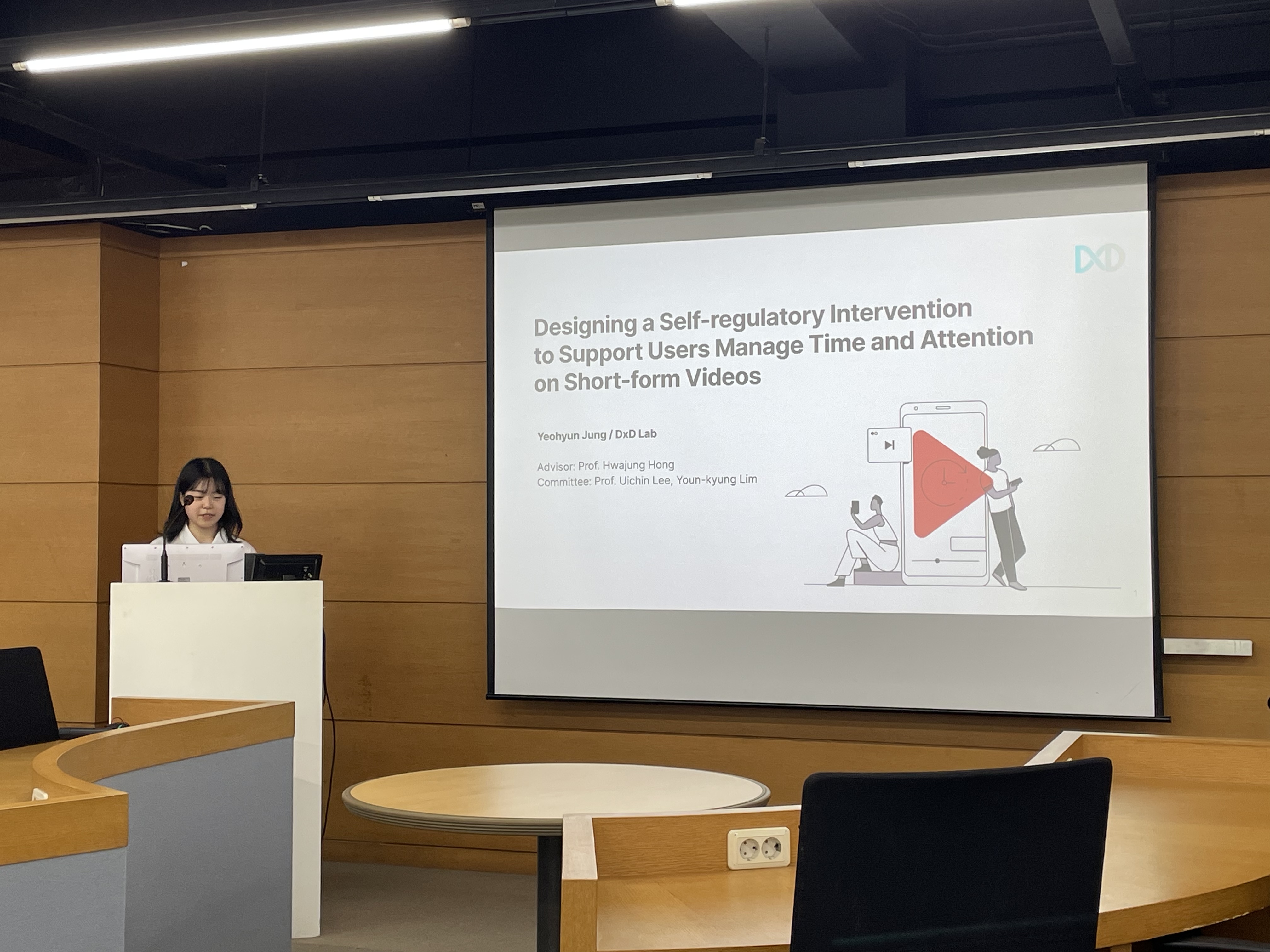
Intervention design
Digital well-being
(Research planning, Study design, User research, Prototyping, Data analysis, and Paper writing)